7 things the VALORANT Champions Shanghai group stage revealed
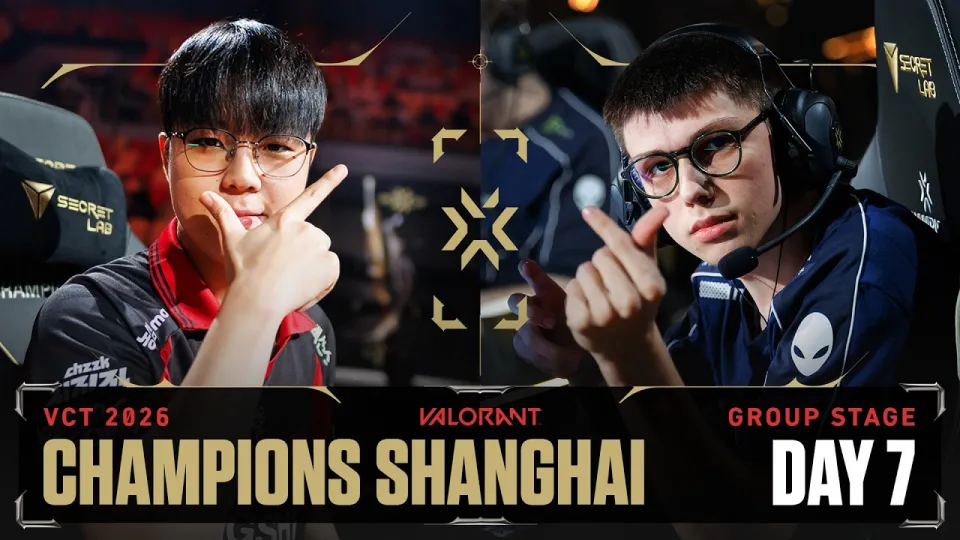
Video: VALORANT Champions Shanghai — Group Stage — Day 7
You can order the same kind of articles for your own video to boost it on YouTube and Google. Just message the Telegram bot @sat_sit_bot. The bot writes and publishes the articles itself (with your YouTube video embedded) on popular topical websites (no ads). Try it free: 50 articles on us.
Key takeaways
- VALORANT Champions Shanghai runs September 24 to October 18, with 16 teams from Americas, CN, EMEA and Pacific.
- Group Stage Day 7 was the seventh broadcast day of the opening phase, streamed by the VALORANT Champions Tour channel.
- The broadcast drew repeated complaints about technical pauses interrupting maps.
- Viewers questioned CN's depth versus other regions and criticized eco and 5v2 round losses.
- Two different Masters champions in 2026 set up Shanghai as the year's decisive trophy.
VALORANT Champions Shanghai is the 2026 world championship, where 16 teams from Americas, CN, EMEA and Pacific fight for the biggest trophy of the year between September 24 and October 18. The group stage decides who reaches the playoff bracket and who goes home before the main event. Day 7 of that phase, broadcast by the VALORANT Champions Tour, is a useful snapshot of how the tournament is actually playing out. For schedules, brackets and official updates, follow VALORANT Esports on X.
What the VALORANT Champions Shanghai format actually is
The group stage is the filter that turns a 16-team field into a playoff bracket, and every map in it carries seeding weight. Teams arrive from four regions — Americas, CN, EMEA and Pacific — and the group phase is where regional strength gets tested against unfamiliar styles rather than the same domestic opponents. Because Champions is the last international event of the year, the group stage doubles as a verdict on the whole season: the teams that adapted fastest in the opening days are usually the ones still standing in October.
Day 7 sits deep enough into the phase that early nerves are gone and the real problems show. Drafts are more prepared, pistol rounds matter more, and teams that rely on one comfort map start getting banned out. That is exactly the point where a group stage stops being a formality and starts producing the upsets that define a tournament.
Why technical pauses kept interrupting the broadcast
Technical pauses were the most repeated complaint from viewers on Day 7, and they matter because they change the rhythm of a map. A pause does not just delay the stream — it resets momentum, gives coaches extra time to talk, and breaks the flow of a team that was mid-comeback. When several pauses stack up across a single broadcast day, the viewing experience suffers even if the server-side issue is nobody's fault.
For anyone watching a VOD rather than the live show, this is also practical advice: expect dead air and skip it. Community-made timestamp lists exist precisely because long broadcast days include pauses, analyst segments and replays. If you plan to watch the full Day 7 stream, treat the pause blocks as breaks rather than as evidence about either team's level.
The CN question and the depth of the field
A recurring argument among viewers was whether CN's representatives at Champions were weaker than teams from other regions that never qualified. That debate is older than this event, and it is structural rather than personal: regional slots are allocated by region, so the fourth-best team in a stacked region can miss out while a weaker region sends multiple squads. Judging CN as a whole from a handful of maps is unfair, but so is pretending the gap does not exist.
The more specific criticism aimed at CN teams was about round management — losing eco rounds, dropping 5v2 retakes, and struggling once set strategies broke down. Those are execution problems, not talent problems, and they are the kind of issue that gets exposed at Champions because every opponent punishes free rounds. Whether CN closes that gap is one of the more interesting storylines left in the bracket.
Five things that separate group-stage teams from playoff teams
- Eco discipline. Winning or losing the cheap rounds decides more maps than highlight plays; viewers singled out lost anti-eco rounds as the clearest sign of a team out of its depth.
- Man-advantage conversion. A 5v2 should be a formality. Teams that lose them are usually the ones that also lose the map.
- Utility creativity. When default setups fail, the squads that improvise with smokes, flashes and recon tools survive; the ones that freeze do not.
- Adapting after the first loss. Group stage is long enough that one bad map is recoverable — but only for teams that change their draft.
- Handling disruption. Pauses, long days and back-to-back maps test composure as much as aim.
What the Masters results tell us about Shanghai
Two different champions across the 2026 Masters events is the single most important piece of context for this world championship. It means no team arrived in Shanghai as an untouchable favorite, and it means the field genuinely has multiple squads capable of winning a Bo5. The event description frames this as a shift in the era: familiar names, new contenders, and a generation of challengers who have already broken expectations once this year.
That framing is not just marketing. When the season's biggest titles are split, the group stage becomes a scouting exercise for everyone — fans, analysts and opposing coaches — because there is no dominant meta to copy. The team that reads the patch and the bracket fastest usually lifts the trophy.
How to watch and follow the rest of the event
The official VALORANT Champions Tour channel carries the full broadcast, including group stage days and the playoff rounds that follow. Live viewing is split across Twitch and YouTube, with clips and highlights pushed to the esports social accounts. If you only care about results, the official news page and the X account are the fastest sources for scores, brackets and schedule changes.
For VOD watchers, the practical approach is to check a timestamp list first, skip pauses and analyst blocks, and watch maps in full rather than highlights — the round-by-round context is what makes Champions readable. Full-day VODs are long, but they are also the only way to see how a team's draft evolves across a series.
Useful links
- VALORANT Esports on X — scores, brackets and announcements
- VALORANT Esports on Facebook
- VALORANT Esports on Instagram
- VALORANT Esports on TikTok
- VALORANT on Twitch
Bottom line
The VALORANT Champions Shanghai group stage is doing what a good opening phase should: separating teams that can adapt from teams that only have one plan. The repeated technical pauses hurt the broadcast, and the debate over regional depth is legitimate, but neither changes the core read — with two different Masters champions in 2026, the bracket is wide open. Day 7 of the group stage, published by the VALORANT Champions Tour, is worth watching in full for anyone who wants to understand how the playoff field was built. Follow VALORANT Esports on X to keep up with the bracket as Champions moves toward its final.
Questions & answers
What is the VALORANT Champions Shanghai group stage?
It is the opening phase of the 2026 world championship, where 16 teams from Americas, CN, EMEA and Pacific play to earn places in the playoff bracket. It runs as part of the event window from September 24 to October 18. Day 7 is one broadcast day within that phase.
Why were there so many technical pauses on Day 7?
Viewers repeatedly complained about pauses interrupting maps, and the exact cause is not detailed in the broadcast description. In practice, pauses reset momentum and stretch the runtime of a broadcast day, which is why timestamp lists are popular for VOD viewing.
Are CN teams really weaker than other regions at Champions?
Regional slot allocation means a strong region can leave good teams at home while a weaker region sends several squads, so the comparison is not clean. The specific criticism aimed at CN squads was about losing eco rounds and 5v2 situations, which are execution issues rather than a lack of individual skill.
Where can I watch the rest of VALORANT Champions Shanghai?
The full broadcast airs on the official VALORANT Champions Tour channel, with live viewing on Twitch and YouTube. Scores, brackets and schedule updates are posted on the official VALORANT Esports X account and the esports news page.
Source: VALORANT Champions Shanghai — Group Stage — Day 7 · Markdown version